

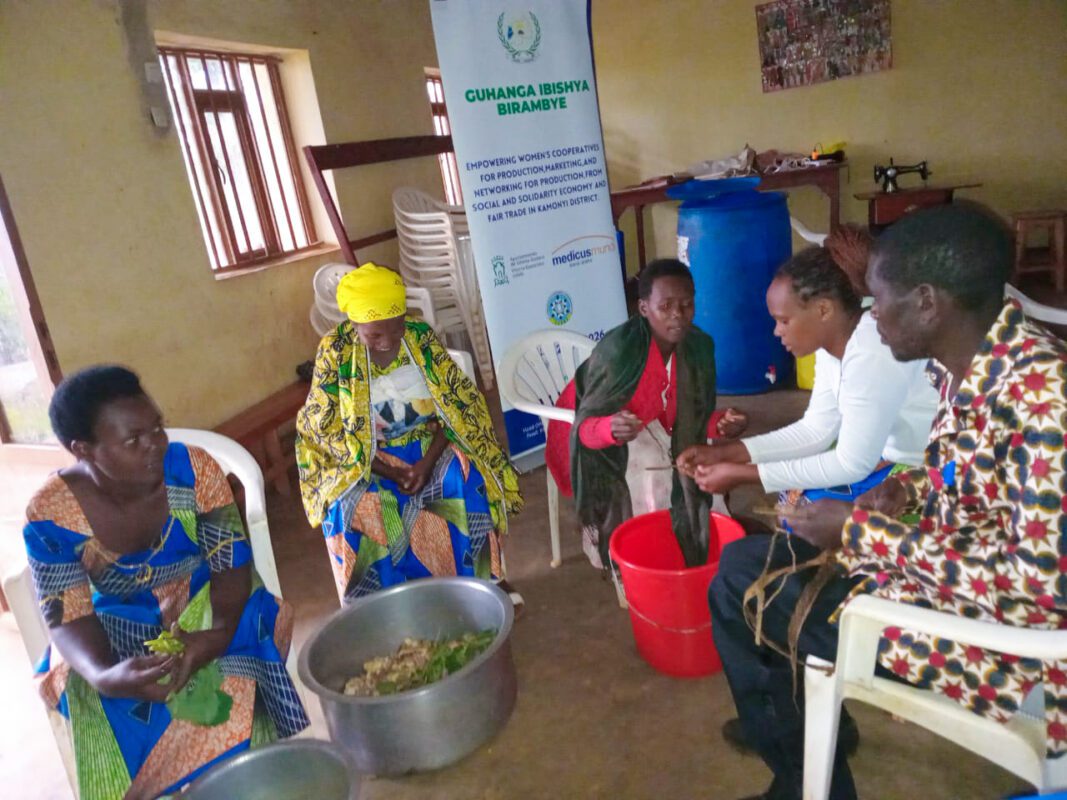
KAMONYI, RWANDA ; In a significant step toward eco-friendly agriculture, women-led cooperatives in the Kamonyi District are undergoing specialized training to produce and apply organic pesticides and vermicompost. The initiative, spearheaded by ARDE/KUBAHO, aims to equip rural farmers with the tools to boost crop yields while protecting the environment from chemical degradation.
The training brings together members from several key local cooperatives, including Ituze-Kigese (Rugalika Sector) and Duharanirubuzima-Gatwa (Ngamba Sector). These groups, which have long been at the forefront of community resilience, are now transitioning toward “Circular Economy” practices by turning organic waste into high-value agricultural inputs.
Turning Waste into “Black Gold”
A central pillar of the program is the introduction of vermicomposting; a process using specific earthworm species to break down organic matter.
-
Soil Health: Unlike synthetic fertilizers, vermicompost improves soil structure and water retention.
-
Cost-Efficiency: Farmers use locally available waste, such as food scraps and manure, reducing their reliance on expensive imported chemicals.
-
Natural Protection: Participants are also learning to create botanical pesticides from local plants, which provide a safer alternative for both the farmers and the consumers.
Empowering Rural Women
The project, titled “Guhanga Ibishya Birambye” (Creating Sustainable Innovation), is implemented by ARDE/KUBAHO in partnership with UGAMA and supported by Medicus Mundi Álava.
“For many women in Kamonyi, this training represents an opportunity to secure both food and income sustainability for their families,” noted Bellancille, a project technician from ARDE/KUBAHO.
By mastering these organic techniques, the cooperatives are not only restoring soil fertility but also positioning themselves to meet the growing market demand for organic produce in Rwanda.
Looking Ahead
As the training concludes, the cooperatives plan to establish “demonstration plots” where other community members can witness the benefits of organic farming firsthand. This grassroots movement is expected to serve as a model for climate-smart agriculture across the Southern Province.
